Historical Context
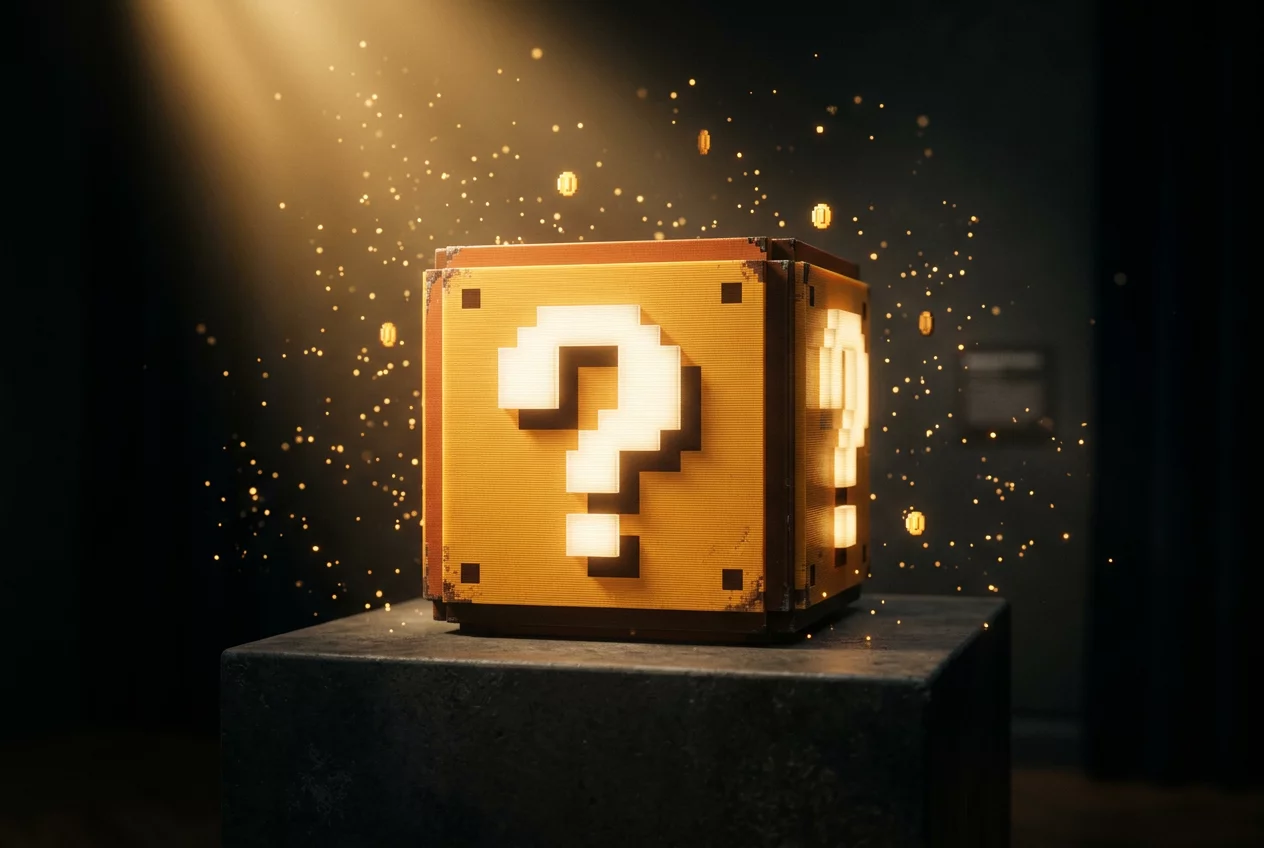
In the original 1985 release of Super Mario Bros., what appeared to be a standard brick could occasionally reward players with more than a single coin. This multi-coin block wasn't just a random event, but a carefully coded sub-system. It introduced a sense of urgency and micro-gameplay that broke the standard movement patterns. To the player, it felt like a lucky find; to the designers, it was a way to encourage rapid interaction and reward precise, repeated button presses under a tight time constraint.
Key Technical Insight
The multi-coin block operates on a strict timer of 216 frames (approximately 3.6 seconds) that triggers upon the very first strike. Once the timer expires, even if the block hasn't reached its internal limit, it transforms into an indestructible brown tile.
Legacy Impact
The success of this mechanic lay in its simplicity and the tactile satisfaction it provided. It created a "mash the button" moment that would be echoed in countless games since. In modern online speedrunning and high-score chasing, mastering the multi-coin block is essential for reaching specific point totals or triggering the elusive crown icon for 100+ lives. It transformed a simple scenery element into a dynamic gameplay event that required player focus and rhythm.
Hidden Economies
Multi-coin blocks represent one of the most elegant hidden mechanics in gaming history. When struck repeatedly within a time window, certain question blocks dispense up to ten coins before transforming into solid brick. This system was not documented in manuals and was rarely discovered by casual players, yet it created a sub-community of dedicated fans who shared tips through playground gossip and early internet forums. The mechanic teaches persistence — that repeated interaction with a system can yield exponentially greater rewards than surface-level engagement.
The placement of multi-coin blocks follows a psychological logic. They often appear in locations where the player is likely to practice jump timing, such as staircases or platforming sequences. This means the discovery is rarely accidental; it emerges naturally from repeated attempts to master a movement challenge. The block becomes a teacher that rewards practice with tangible economic gain, reinforcing the connection between skill development and in-game prosperity.
Curator Note
In an era before achievement systems, multi-coin blocks provided intrinsic motivation through mystery. They proved that secrets need not be cryptic to be compelling; sometimes, the best secret is the one that hides in plain sight, waiting for the curious to find it.
MUSEUM LOG
No comments yet. Be the first to leave a comment on this archive entry.
To leave a comment, please log in to your account.