Category Hero
MUSEUM ARCHIVE

THE FOUNDATION HALL

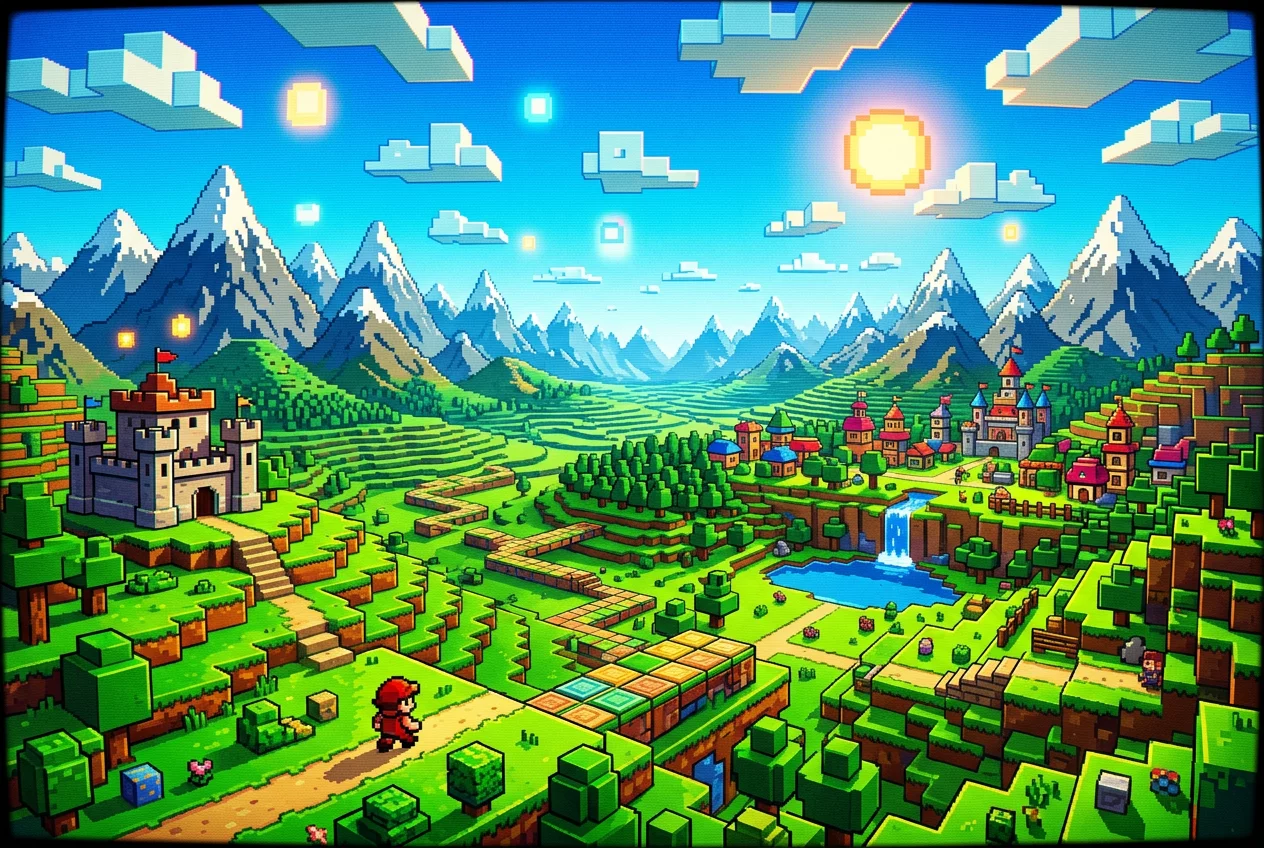
Explore the historical blueprints and technical breakthroughs that defined the platforming genre. A deep analytical look into the birth of a gaming legend.

MUSEUM ARCHIVE

THE FOUNDATION HALL

Explore the historical blueprints and technical breakthroughs that defined the platforming genre. A deep analytical look into the birth of a gaming legend.

Famicom Hardware Analysis

EXHIBIT: HARDWARE REVOLUTION

1985
IMPACTHigh Persistence
CATEGORYTechnical

Analysis of how the Famicom's CPU constraints influenced the smooth scrolling engine. Developers bypassed 8-bit limits to create a fluid, continuous world that felt infinite to users accustomed to static screens.
Design Concepts

EXHIBIT: MIYAMOTO'S BLUEPRINTS

1984
IMPACTPhilosophy Shift
CATEGORYCreative

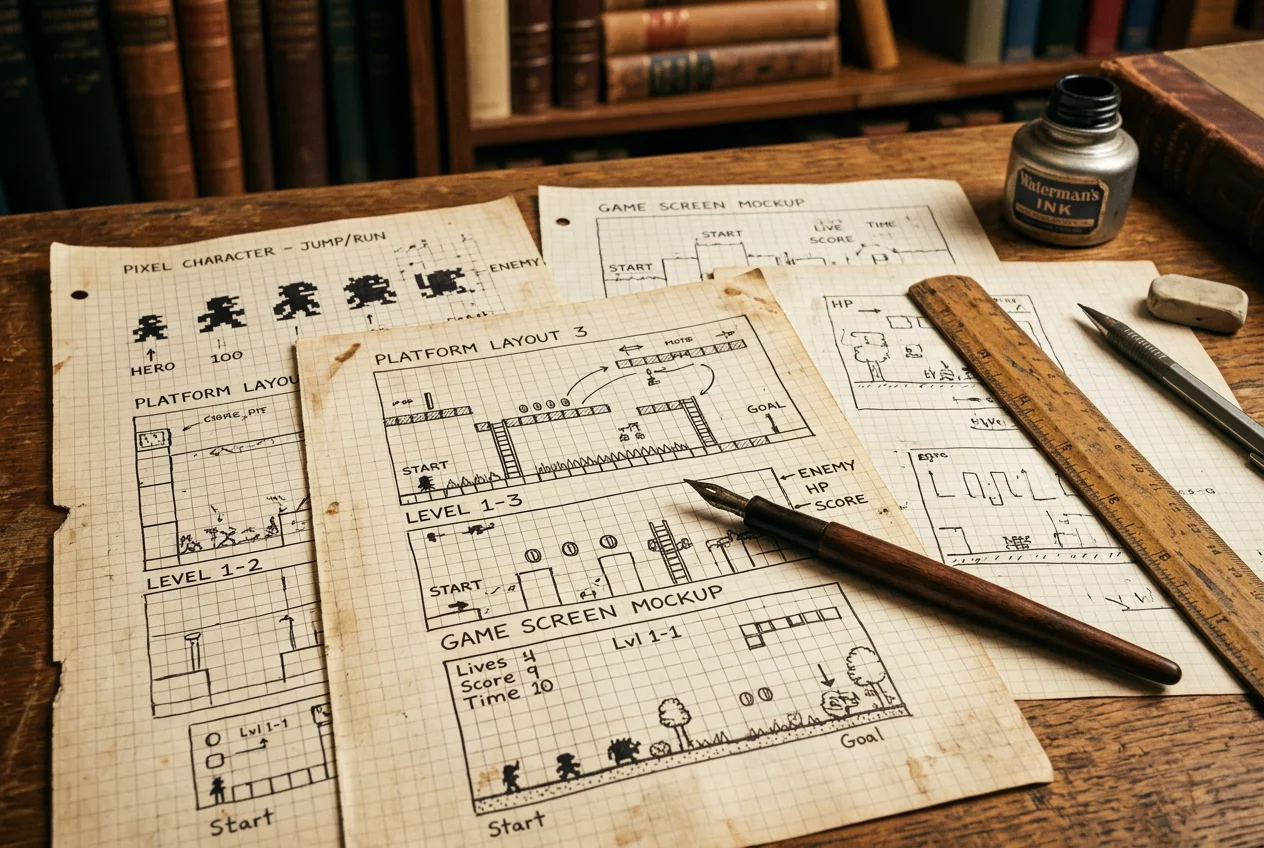
Exploration of Shigeru Miyamoto's philosophy of 'Kyokan' or empathy. The character was designed to be recognizable even in low-resolution sprites, using a cap and mustache to avoid animating hair or facial expressions.

Sound Waveform Analysis

EXHIBIT: KONDO'S OVERWORLD

1985
IMPACTInteractive Audio
CATEGORYAudio

Documenting the first time music was synchronized with on-screen action. Koji Kondo's score was not just background noise but a rhythmic engine that motivated the user's movement and pacing throughout levels.
Level 1-1 Blueprint

EXHIBIT: TEACHING WITHOUT WORDS

1985
IMPACTStandard Setting
CATEGORYTechnical

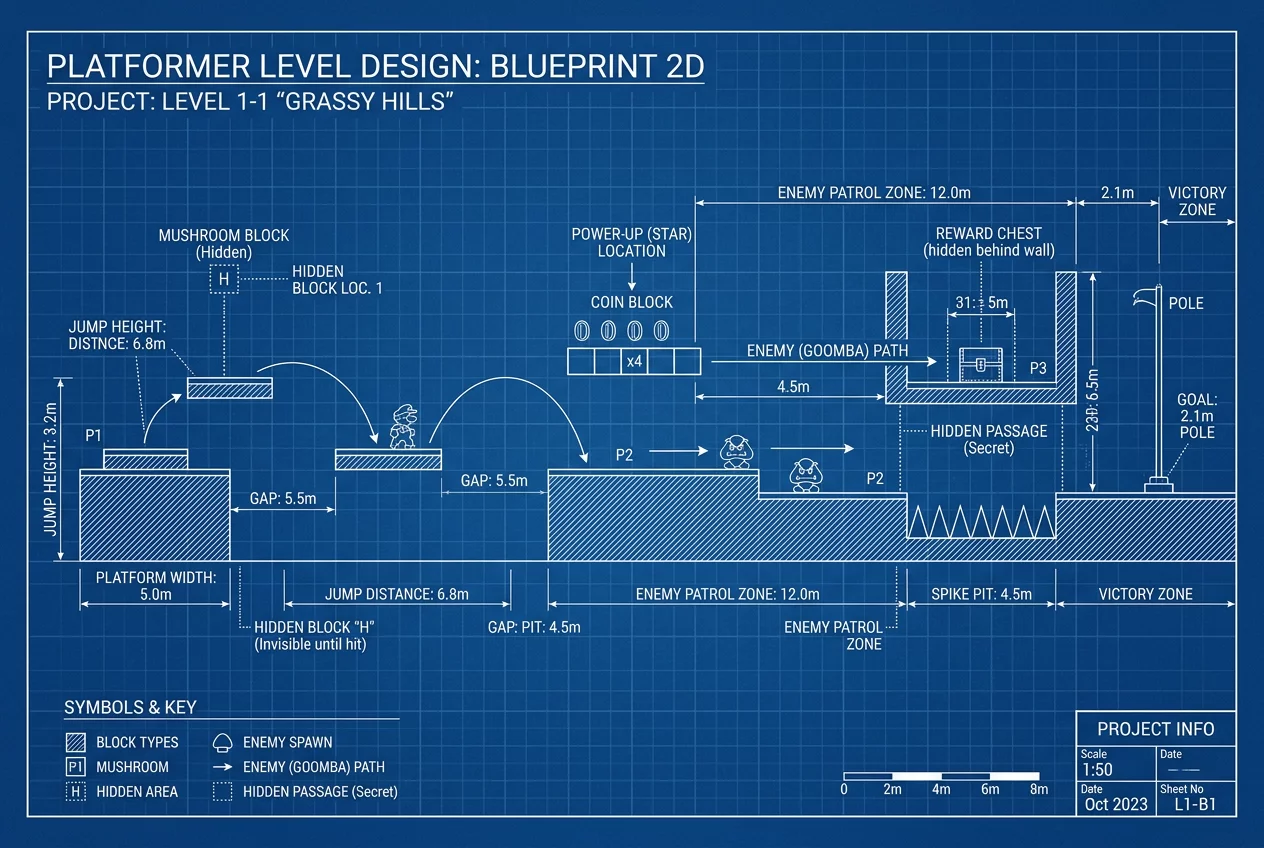
The masterclass of Level 1-1. This exhibit details how the first screen naturally teaches the user to jump, identify threats, and collect rewards without a single line of instructional text.

Museum Exhibit Viewer

Explore key design elements that established Super Mario Bros. as the industry standard

EXHIBIT 01
Jump Mechanics
The physics-based jump that defined platforming responsiveness and set the benchmark for player control.

Design Impact

Mario's jump was not a simple vertical impulse but a tuned physics simulation with variable height, gravity, and air control. This gave players expressive range within a single button press.

Curator Note: The jump arc in Super Mario Bros. was calibrated through hundreds of iterative adjustments. Miyamoto spent weeks refining the gravity constant alone, establishing the principle that platforming lives or dies by the feel of vertical movement.
EXHIBIT 02
Level Structure
The architectural grammar of World 1-1 that taught generations of designers how to build intuitive tutorials.

Design Impact

World 1-1 functions as a silent instructor, introducing one interactive element at a time before combining them into increasingly complex sequences. By the time the player reaches the first pipe, they have mastered running, jumping, and threat identification.

Curator Note: The 1-1 blueprint is now a standard chapter in game design education. It proves that the best teacher is not a manual, but a carefully constructed world where discovery feels like personal achievement.
EXHIBIT 03
Enemy Design Language
Readable, predictable AI patterns that transformed combat from reaction into strategic decision-making.

Design Impact

Every enemy in Super Mario Bros. follows a deterministic patrol route. Goombas walk forward and never turn. Koopas patrol small areas. This legibility gives players agency: they can choose to stomp, avoid, or exploit each threat.

Curator Note: The decision to make enemies predictable rather than random established a contract of trust between designer and player. Modern stealth and tactical games still inherit this philosophy of readable AI.